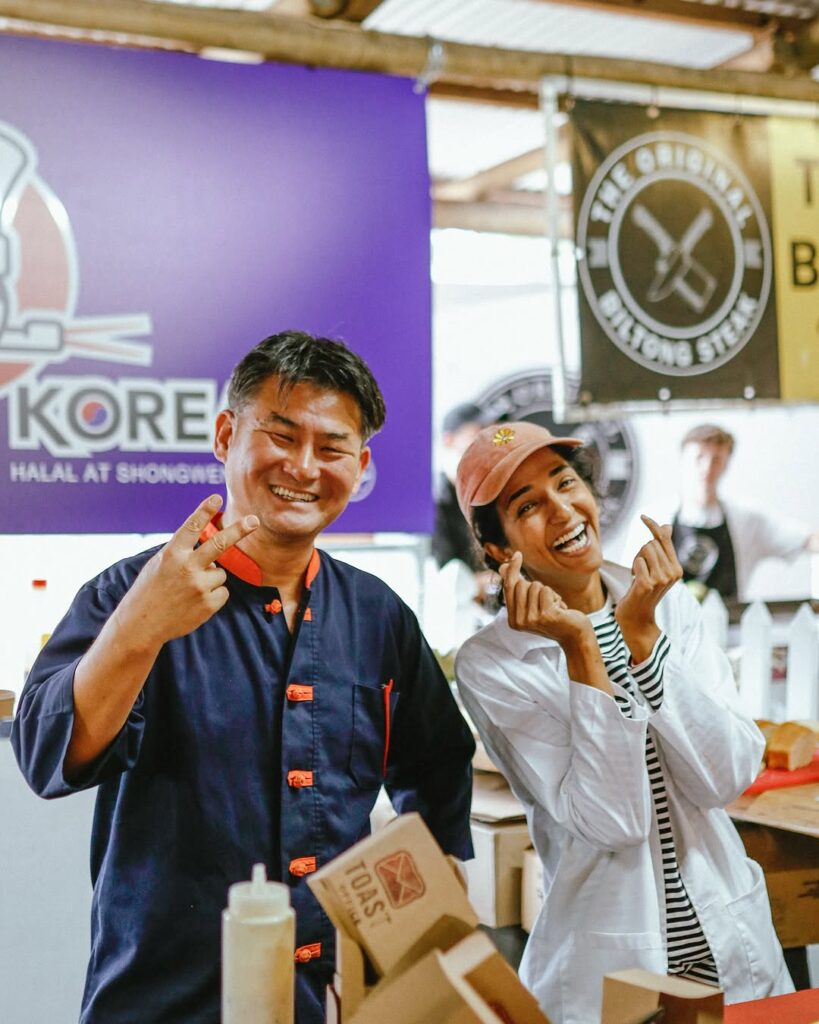
I’m Nairah, and my journey with food has been as layered and flavorful as a perfect bite of bibimbap, spicy, comforting, and full of surprises.
The scent of something warm and spiced filled my childhood home long before I ever knew the names of the dishes. It drifted through the rooms, wrapped itself around the furniture, and settled into the folds of my memory. My mother, who was a teacher before she was anything else, stood at the stove with the same quiet determination she used in the classroom. Cooking wasn’t her profession, but it was her language, one she had inherited from her mother, my Granny Zora.
Granny Zora was a woman I knew only in fragments. Honey-colored light spilling from the kitchen, the swish of her skirts as she moved, the rhythmic tapping of a wooden spoon against a pot. She left behind five children and a legacy of taste, as if the recipes she passed down carried echoes of her presence. Long after she was gone, she remained in every spice sprinkled just right, in every pot that simmered with intention.
I didn’t realize back then that food had its own way of time-traveling. That flavors could carry history the way old books carried pressed flowers between their pages.
From Memory to Mastery
When I traveled through Korea, Palestine, and Istanbul, I found myself tracing history through flavors. The sweet, syrupy stretch of kanafa. The sharp, fermented bite of kimchi. The fragrant steam rising from a pot of bulgogi. Every dish told a story.
Korean food, in particular, gave me a sense of vitality. Even when deemed ‘unhealthy’ by Western standards, it is celebrated with joy and playfulness in Korea. There, food is not just sustenance; it’s an experience, a communal joy shared around the table. Koreans eat with their whole being. Mixing textures with gusto, relishing the contrast of sweet and spicy, the sharp tang of kimchi paired with the warmth of broth that feels like a hug from an old friend.
But food isn’t just about nostalgia. It’s about discipline.
I had always been restless. Structure never fit me. I stumbled through school, struggled to fit into traditional paths, always feeling like I was supposed to be doing something else. And
then, somehow, I found myself here, in a kitchen, sleeves rolled up, flames licking the sides of a pan.
Cooking is an art, yes. But it is also a practice, a rhythm, a philosophy. In Korea, food isn’t just eaten; it is studied, practiced, mastered. There are chefs who dedicate entire lifetimes to a single dish, perfecting the balance of salt in a broth, the crisp of a pancake, the fermentation of a single cabbage leaf. There is no rush. There is only the work, and the honor of doing it well.
I had never thought about food like that before. But I was beginning to.
Enter Kwan Jeong – AKA ‘Crazy Korean’
If I was drawn to food through instinct, KwanJeong (as known as KJ) was drawn to it through bloodline and rebellion.
Born into a family restaurant in Seoul, food was always part of KJ’s life. But he had no intention of inheriting the legacy. Instead, he climbed the corporate ladder, an engineer in the polished halls of Samsung, where performance reviews were scripture and precision was absolute. At the edges of his calculations, though, there was always the scent of something simmering. His mother’s restaurant – a place where fire met steel, where recipes were tested over generations, where perfection wasn’t a formula but a feeling.
One day, KJ left the boardroom for the kitchen. He traded suits for chef coats, strategy meetings for mise en place, and KPIs for the fine art of balancing spice and heat. He brought the sharpness of his corporate life with him. Spreadsheets, performance reviews, expense tracking, driving sales like a strategist on a battlefield. Running a kitchen, it turned out, wasn’t just about cooking but also it was business, a relentless machine of margins, marketing, stock control, and cash flow.
And now here we are, the two of us. Flipping eggs with taekwondo-like efficiency, navigating flames, spices, and the fine balance between tradition and reinvention.
KJ is discipline. I am chaos. Fire and ice, whatever that means.
The Art of Halal Korean Food
For both of us, Korean food isn’t just something we eat; it’s something we feel. It’s about joy, about sharing, about honoring the generations who have perfected the art of fermentation, grilling, and balancing flavors that awaken every corner of your palate.
Kimchi, for instance, is more than just a side dish. It’s a living thing, a celebration of time and transformation. The very bacteria that ferment it are alive, bringing you alive with every bite.
The relationship with food is an intimate one. For some, it’s just calories, a numbers game. But for us, like Koreans, like Indians. Food is culture, it’s love, it’s sustenance in every sense of the word. It’s the way we show care, the way we nourish not just the body but the soul. Every meal is an opportunity to connect, to discover new depths of perception, new
layers of experience.
Halal Korean food is more than just a niche. It’s a bridge between traditions, a story on a plate. And I feel privileged to be one of its storytellers.
Whether it’s through the fiery heat of yangnyeom chicken or the comforting umami of a steaming bowl of sundubu jjigae, this is food made with love, to be eaten with even more love.